Room 11:43 Chapter One — The Offer

The message did not arrive; it was discovered.
Mira found it while her phone was resting on the scarred laminate of her kitchen table. The screen didn't flash. There was no chime. One moment the glass was a black mirror reflecting the dim, amber light of the stove; the next, the words were simply there, occupying the space with the flat certainty of an invoice.
Room 11:43. Five hours. Fifty euros. 09:00.
There was no sender. No metadata to trace. She tried to delete it, but the text remained, anchored to the display as if it were a physical defect in the hardware.
Fifty euros. In this city, that was the price of a week’s breath. It was the difference between a functional life and the slow, grinding erosion of hunger. She looked at Abhi. He was staring at his own phone, his face pale in the screen's glow. He didn't have to show her. The weight of the silence told her the offer was identical.
They didn't discuss it. When the system offers a solution to an insoluble problem, the "choice" is merely a formality. They began to dress.
The building was a monument to the unremarkable—a muted, institutional green structure that sat in a row of others exactly like it. It didn't look like a secret; it looked like an annex for a government department that had been forgotten by its own bureaucracy.
Inside, the lobby smelled of ozone and industrial floor wax.
Behind a stainless steel desk sat an elderly man managing bicycle locks. He wore a uniform that was too clean, the fabric stiff and devoid of wrinkles. He didn't ask for names. He didn't ask for a purpose. He merely waited.
"Lock," he said. His voice was like a dry leaf skittering across concrete.
Mira handed over her key. The man accepted it and began to write on a long strip of pink paper. The scratching of his pen was the only sound in the cavernous room. When he tore the slip, the sound was sharp, final.
"Eleventh floor," he said, handing her a small, unmarked metal key and the long receipt. "The paper is the exit. Do not lose the paper."
The elevator arrived without being called. It was a brushed-steel box with no buttons. It didn't feel like it was moving up; it felt like the world was being lowered around them.
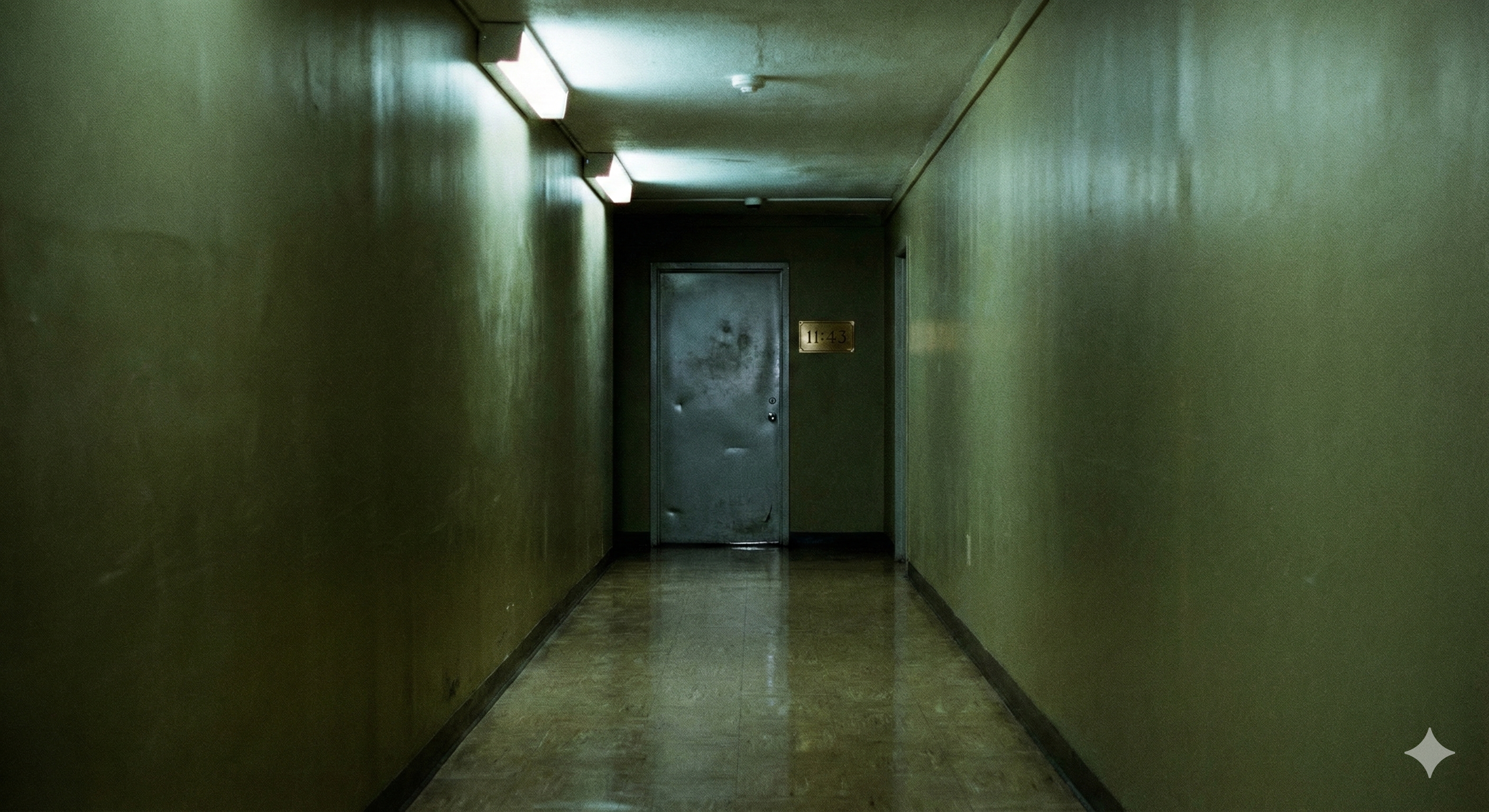
The eleventh-floor corridor was a tunnel of that same relentless green. Fluorescent lights hummed with a low-frequency buzz that Mira felt in the back of her jaw.
At the end of the hall, a metal plate read: 11:43.
The door opened before Abhi could knock.
The room beyond was industrial in scale—wide enough for movement, narrow enough to feel contained. At the far end stood a long stainless steel table, polished to a reflective sheen. Three figures in dark, wrinkle-free suits sat behind it, their posture so identical it suggested a shared nervous system.
The woman in the center didn't look up. Her pen moved across a clipboard in steady, rhythmic strokes.
"You are here," she said. It was a confirmation of data, not a greeting.
"What is the work?" Abhi asked.
"Five hours," the woman replied, her voice at a constant, unvarying volume. "If a subject exits through the corridor door, you will not. If you fail to report at the assigned hour, you will not. The terms are accepted by your presence."
She looked up then. Her eyes were a flat, matte gray—the color of unpolished steel.
"They attempt to leave," she said, gesturing toward a thick plastic curtain. "You prevent it."
Behind the curtain, the machine began to hum—a deep, rhythmic thrum that vibrated through the concrete floor and into the soles of Mira’s shoes. It was the sound of an engine that had been running for years and would run for years more.
"Strike," the woman said, pointing to a row of hollow metal pipes leaning against the wall.
Mira reached for one. It was cold. It was light. It felt like a component.
At the far end of the room, the side door creaked open. The first one entered.
He shuffled, his shoes dragging with a rhythmic skritch-skritch across the concrete. His head was tilted forward, fixed on the door behind Mira.
"Strike," the woman repeated.
Mira looked at the man. She looked at the pipe. She looked at the way the stainless steel table reflected the overhead lights in a perfect, unbroken line.
The room wasn’t a trap. It was a passage.
Something was moving through it, and for the first time, she understood with a cold, hollow clarity which direction she was moving.
You should also read:
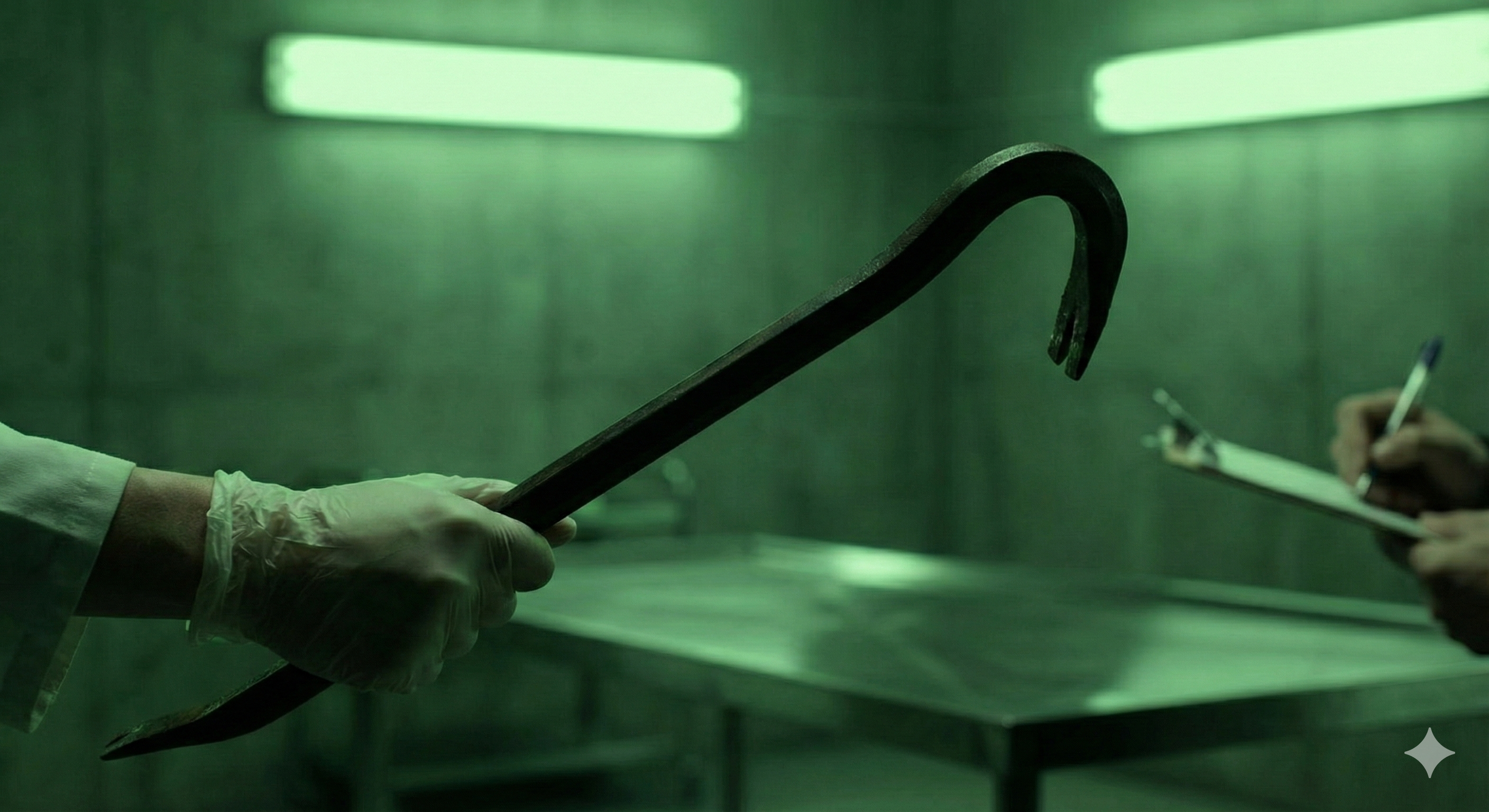
Room 11:43 Chapter Six — The Relocation
The building did not resist their deviation. When Mira and Abhi stepped off the elevator on the eleventh floor, the corridor was unchanged — the same muted green, the same low fluorescent hum. Room 11:43 waited at the far end, patient, rectangular, exact. They did…
Continue reading...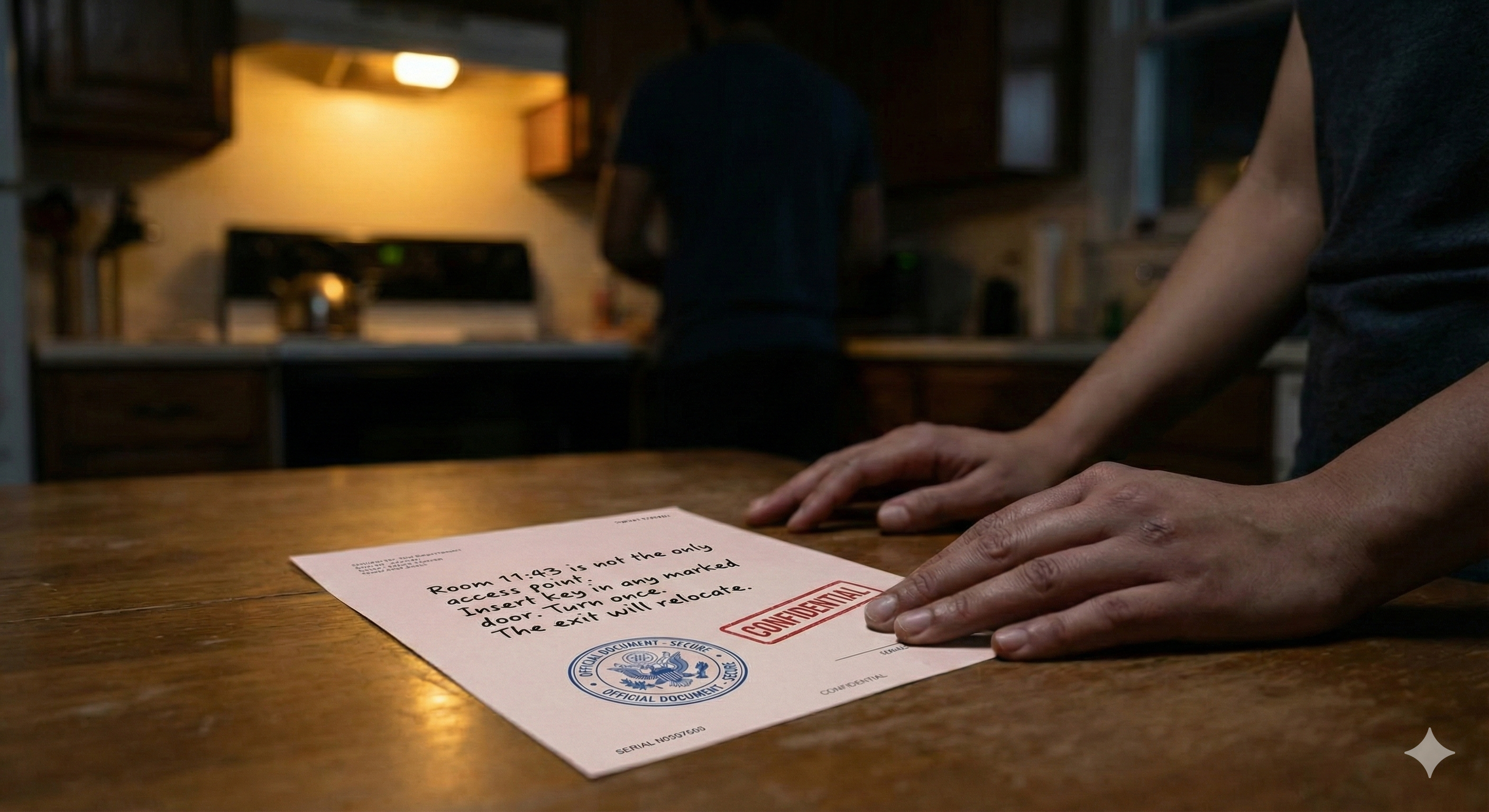
Room 11:43 Chapter Five — The Receipt of Terms
By the fourth week, Mira no longer counted the days. The rhythm of the shift had replaced the calendar. Five hours. Fifteen hundred seconds of clean interception. The hum beneath the floor. The stainless steel reflection. The silence of the table. The work had stopped…
Continue reading...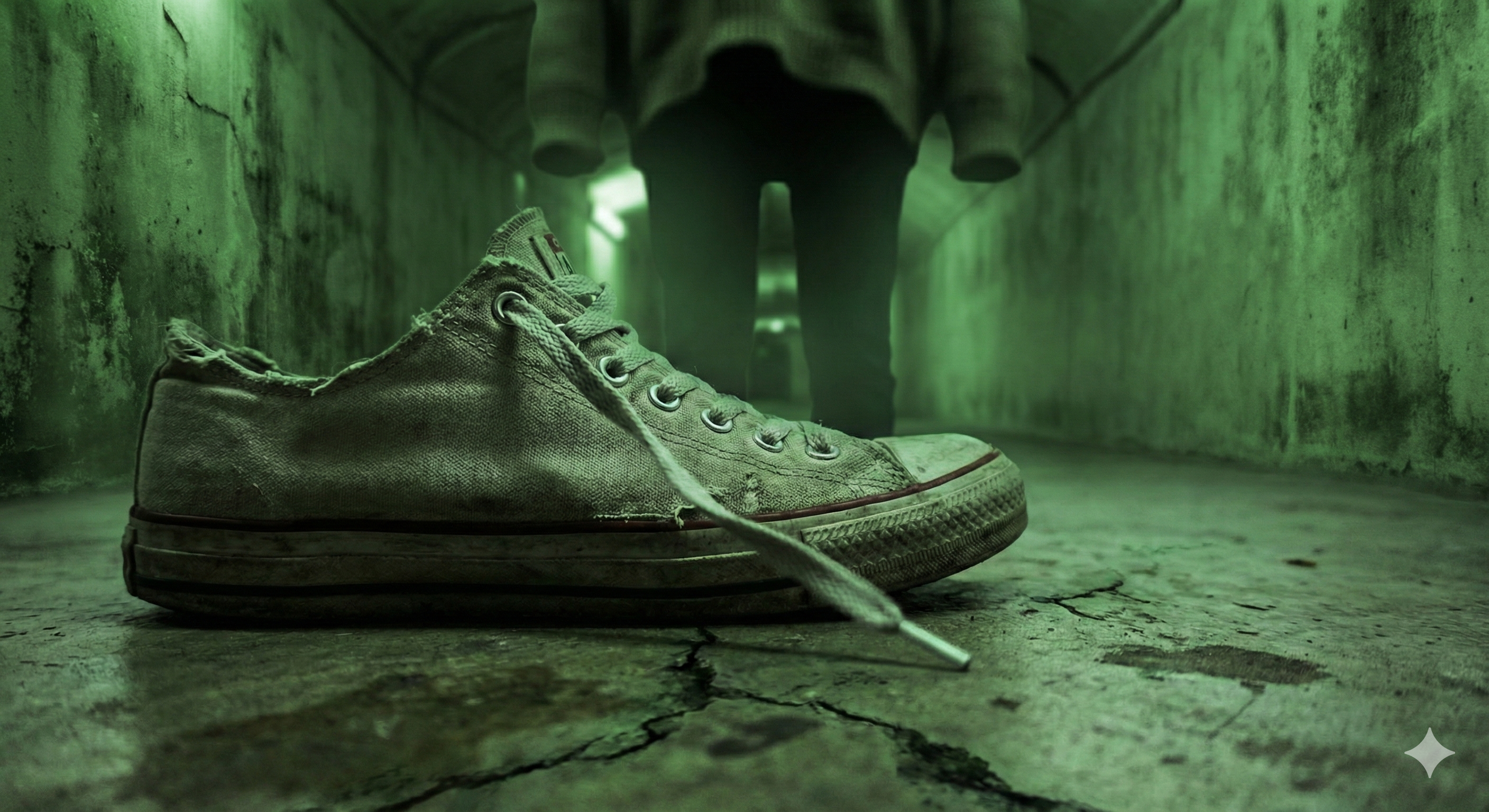
Room 11:43 Chapter Four — The Anatomy of a Fracture
The city did not know about Room 11:43, and its ignorance had begun to press against Mira in ways she could not easily articulate. It wasn’t that she expected the world to acknowledge what happened on the eleventh floor; it was that the world continued…
Continue reading...