The Quiet Weight Of Orders - Part 1 of 4

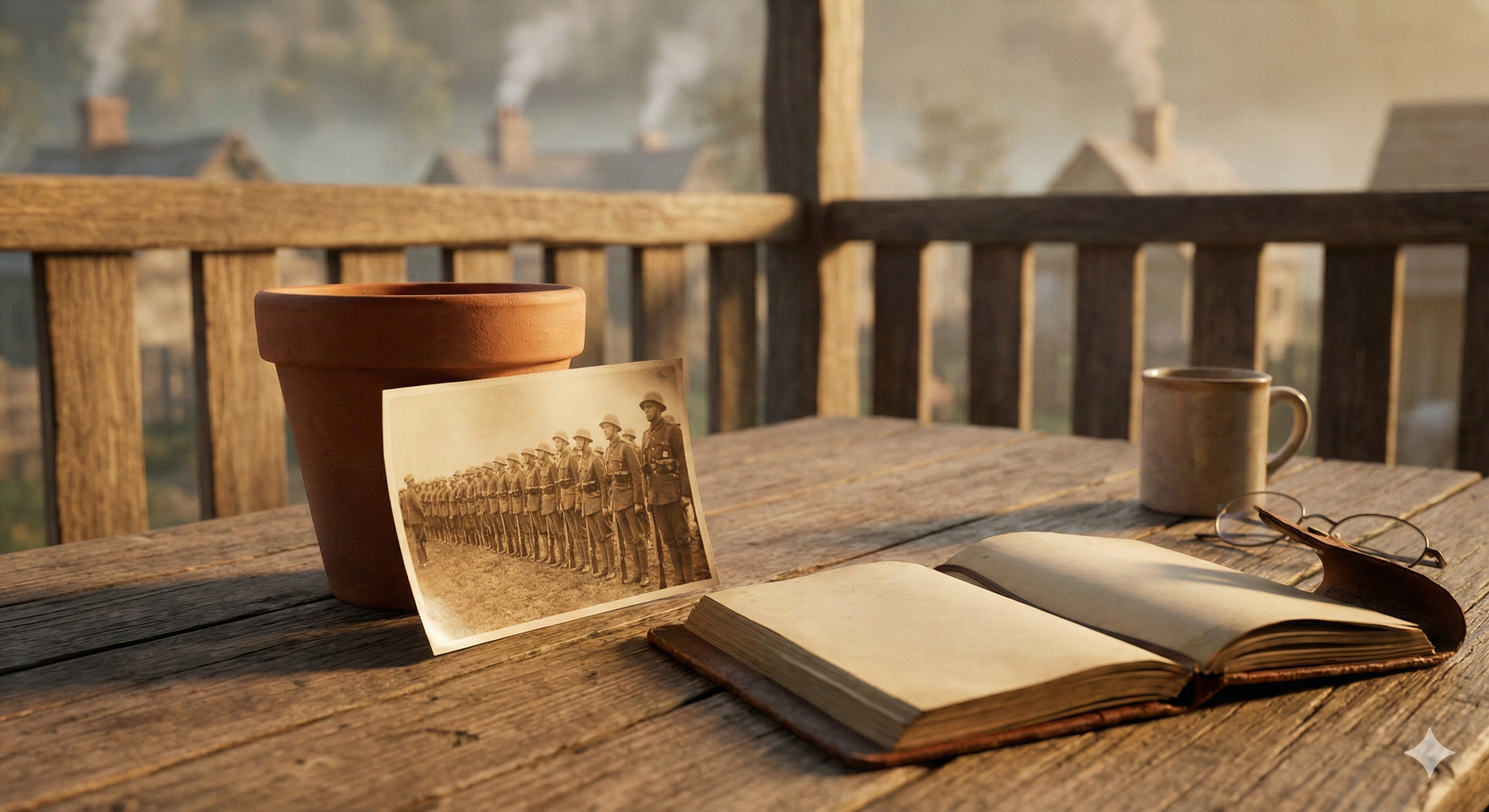
The photograph slipped out from between the pages of a notebook I had not touched in months, landing with a soft, papery sound close to the verandah door. Morning light had just begun to stretch across the wooden floor, warming it in slow, amber patches, and the village below was settling into its familiar rhythm — a shopkeeper dragging open his shutters, a dog nosing at a discarded wrapper, the faint, rhythmic tapping of someone splitting kindling for the stove. I picked up the fallen sheet expecting a reminder or an old scribble, but instead found myself looking at a line of soldiers arranged neatly on an open ground. Their uniforms were clean, their boots aligned, their shoulders set in that particular stillness that comes from learning to follow a command before fully understanding it. There was nothing dramatic about the scene, nothing that would catch the eye of someone unaware of its significance, and yet I found myself holding the photograph for longer than I intended, as if the silence in it had something more to say.
I carried it with me to the verandah, placing it beside my cup of tea, and sat for a while listening to the valley as it woke. The tea steamed gently, the sun lifted itself over the ridge, and life moved without impatience, as it does in these mountains. But the photograph stayed at the edge of my vision, waiting with the quiet persistence of a thought that does not ask for attention but begins to gather it anyway. I told myself I would look at it later, yet as I watched the sunlight creep across the railing, something in the faces — young, composed, somehow detached from their own intentions — began to stir an uneasiness in me, not sharp enough to be called disturbance, but unmistakably present.
I left the verandah and walked down the familiar path toward the village to buy vegetables; a simple errand does not normally carry philosophical company, but the image accompanied me like a shadow that prefers to walk one step behind rather than directly beside you. By the time I reached the shop near the bend — the one where lentils, gossip, and weather predictions are all traded with equal authority — I realised the origin of the unease. It wasn’t about the uniform, nor the idea of soldiering itself; it emerged instead from a single, simple question that had slipped quietly into my thoughts: what does it mean for a person to give his courage over to someone else's decision?
The day continued with its ordinary details — a man haggling over onions, children chasing after a ball, a streak of sunlight lingering on a tin roof — but the question did not leave. It moved with me as I returned home, climbed the short flight of steps, and settled once more on the verandah. By then the question had grown roots, not in a dramatic way, but in the manner of something long familiar finally beginning to articulate itself. I think it had lived in me for years without words. The photograph had only dislodged it from its hiding place.
Continue to Part 2.
You should also read:
Chitralekha Part VI - The Solitude of Choice
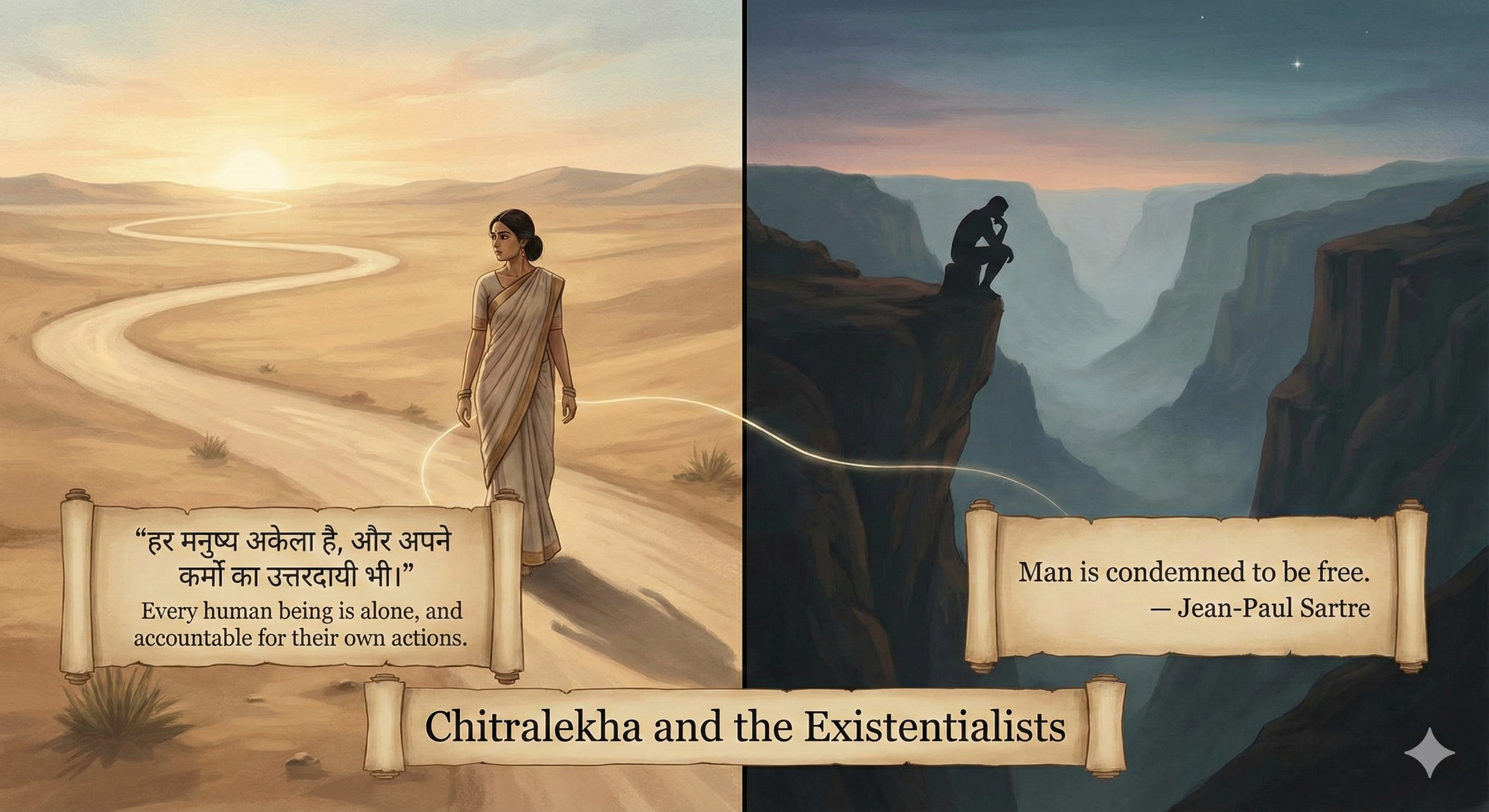
“हर मनुष्य अकेला है, और अपने कर्मों का उत्तरदायी भी।” Every human being is alone, and accountable for their own actions. That line appears late in the book, almost hidden in a quiet dialogue, but it struck me like a bell. It’s the point where…
Continue reading...
Chitralekha Part V - In the Company of the Stoics
“हम अपने कर्मों के स्वामी हैं, परिस्थितियों के नहीं।” We are masters of our actions, not of our circumstances. I didn’t think a Hindi novel from 1934 could remind me of Marcus Aurelius — a Roman emperor writing to himself nearly two thousand years earlier.
Continue reading...
Chitralekha Part IV - In the Company of the Gita
“कर्म करो, फल की चिंता मत करो।” Act, but do not cling to the fruit of your action. It’s a line we all know — the heartbeat of the Bhagavad Gita. We hear it so often that it risks becoming background noise, a moral slogan…
Continue reading...